

SERVICE · ARTIFICIAL INTELLIGENCE
Computer vision
We turn any camera into a sensor that understands what it sees.
Counting, detection, classification and alerting over live video, in the cloud or on the device itself.
IndustryRetail
We take you to cinfo's contact form with this item already filled in, so you don't have to explain what it is about.
THE CHALLENGE
Cameras record plenty, and almost nobody watches
A site full of cameras only helps you look back after something has already happened. Turning that image into useful information in the moment means analysing it automatically.
-
Too many hours of video
No team can monitor dozens of cameras continuously and reliably.
-
Data nobody collects
Occupancy, flows, frequencies and patterns that are in the image but never counted.
-
Late reaction
Incidents are found when reviewing the recording, when there is no time left to act.
WHAT IT IS
AI applied to any video input
cinfo builds computer vision solutions on the cameras a client already has or installs: the models detect objects, people and vehicles, generate statistics and raise alarms, in the cloud or directly on the device.
Models trained for the specific use case, not generic off-the-shelf ones.
AI deployable at the edge when latency or bandwidth demand it.
A complete dashboard with reporting, alerts and historical statistics.
Integration with sensors and with signalling or access control systems.
HOW IT WORKS
From use case to a model in production
Every project starts from one concrete, measurable use case, not from a technology in search of a problem.
-
We define the case
What must be detected, with what accuracy, and what should happen when it is.
-
We assess the cameras
Position, angle, resolution and lighting determine what can actually be detected.
-
We train and validate
Models tuned to the real setting, validated on footage from the site itself.
-
We deploy and measure
Go-live in the cloud or at the edge, with dashboard and alarms.
SOLVED CASES
What we have already put into production
-
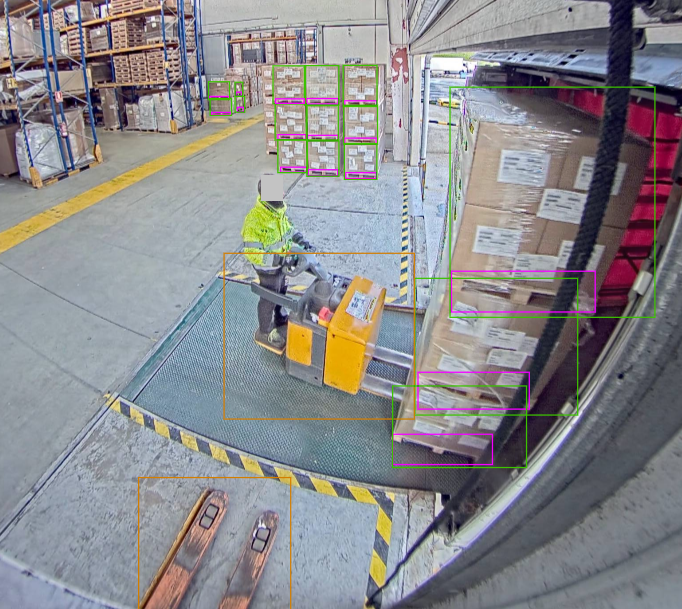
Loading docks
Counting boxes loaded and unloaded, detecting forgotten packages and alerting the warehouse.
-
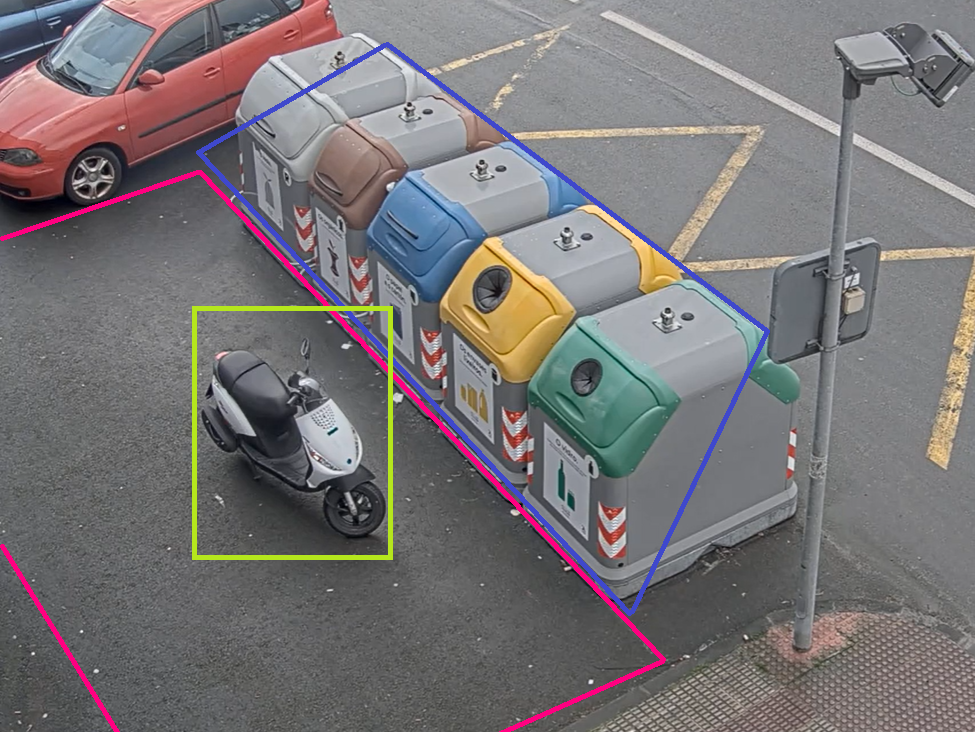
Abandoned objects
Detection and recording of objects left out of place, with AI at the edge.
-
Parking control
Occupancy, free spaces, double parking, dwell time and vehicles in restricted zones.
-
Ports and moorings
Mooring time control and detection of boats in unauthorised areas.
-
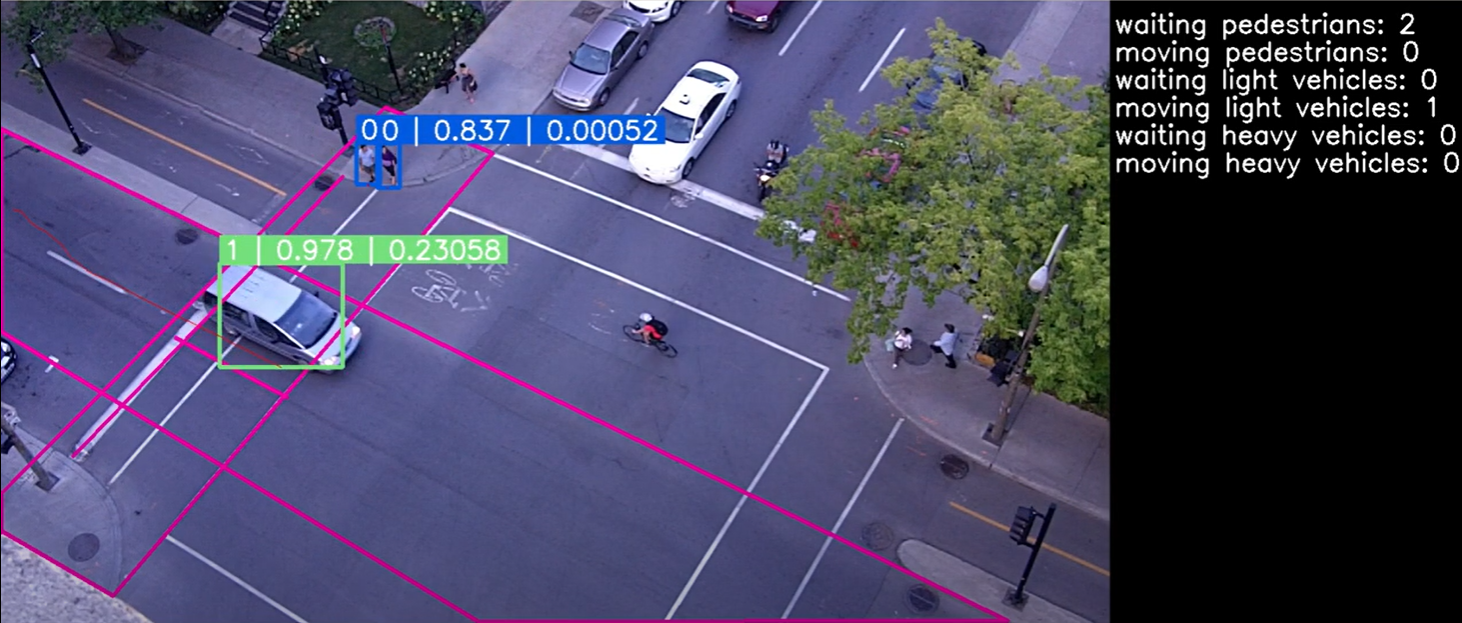
Pedestrian crossings
Pedestrian detection integrated with audible and light signals, and police alerts.
-
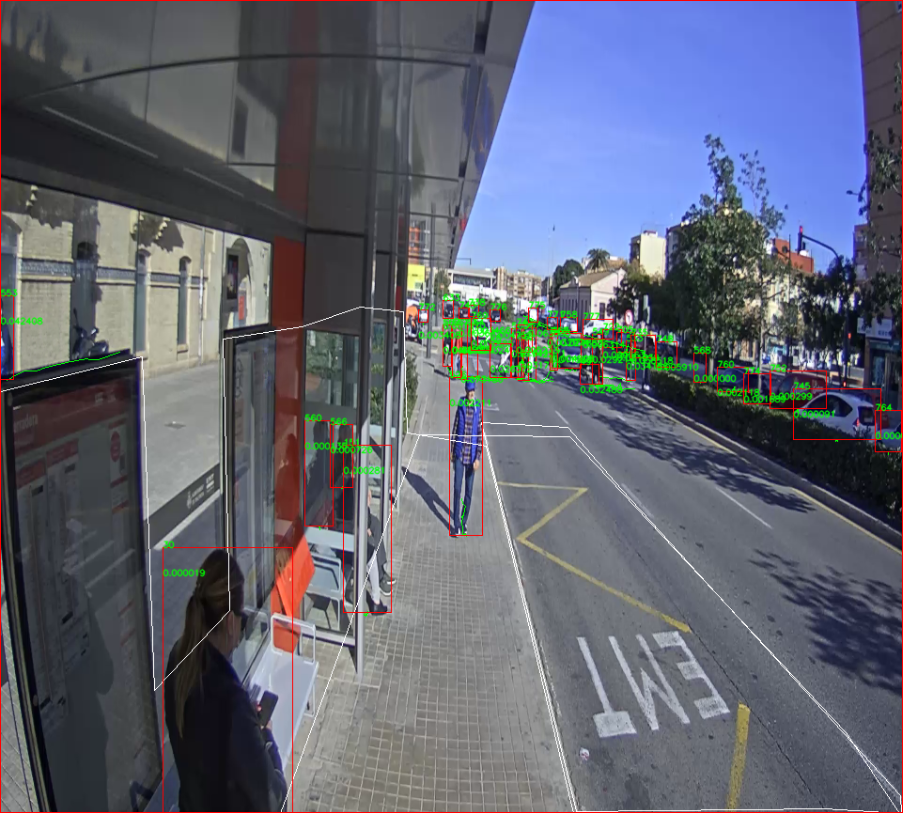
Smart bus shelters
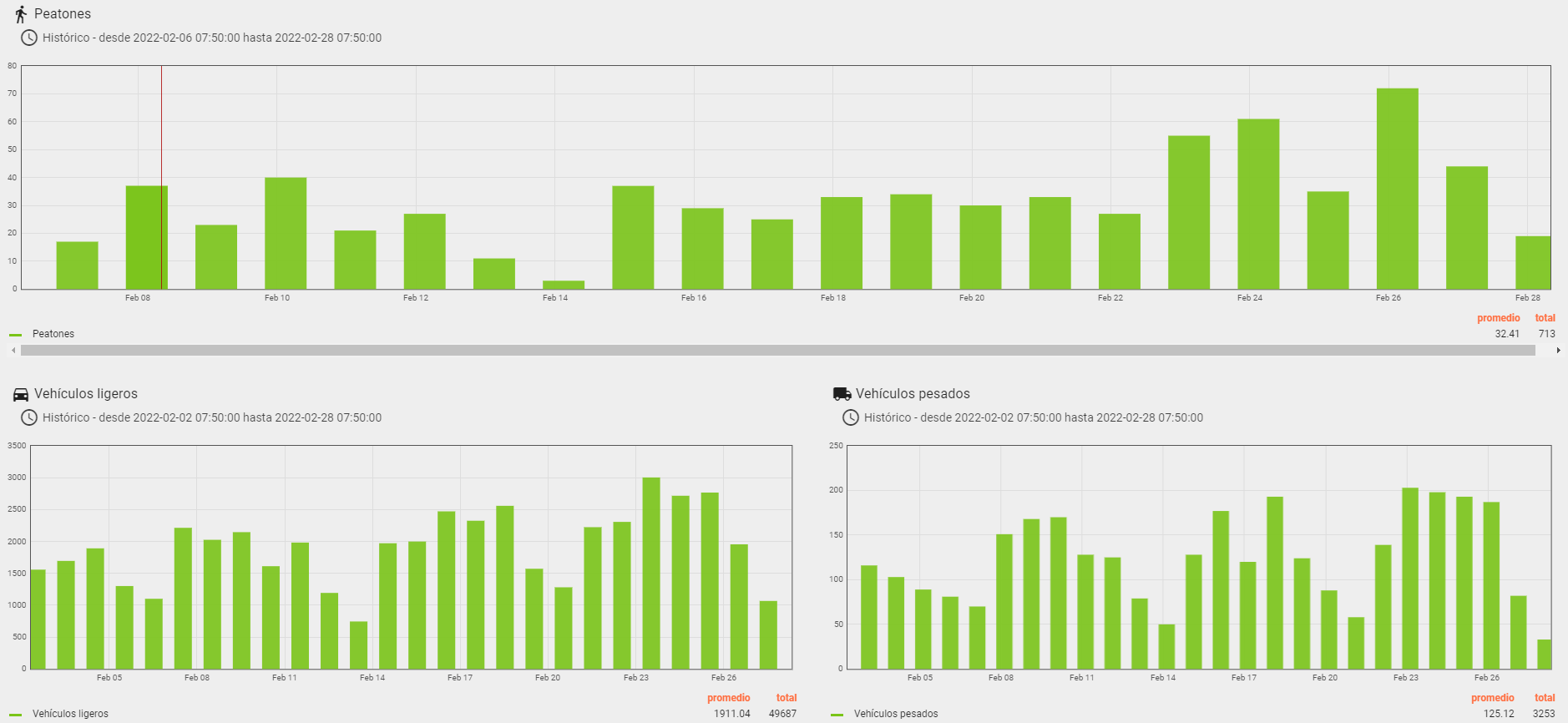
People counting by time slot, boardings and alightings, and service frequency.
-
Traffic modelling
Vehicle classification, direction of travel, patterns, anomalies and plate reading.
-
Sports analysis
Trajectories, positioning, technical gestures and player identification.
BENEFITS
The camera stops being an archive and becomes a sensor
-
Immediate reaction
Alerts the moment the incident happens, not when reviewing the recording.
-
Data where there was none
Counts and patterns that let you size services and justify decisions.
-
It reuses the installation
In many cases the cameras the client already has are enough.
-
Our own technology
Models developed in Spain, with data hosted in our own datacentre.
SCOPE
What a computer vision project includes
A project can be limited to a proof of concept on one camera, or cover full deployment with dashboard and alarms.
-
Feasibility study
An analysis of the available cameras and what can be reliably detected.
-
Proof of concept
A model trained and validated on real footage from the site.
-
Production model
Deployment in the cloud or on an edge device, at the agreed performance.
-
Dashboard
Visualisation of counts, events and statistics, with report export.
-
Alarm system
Configurable rules alerting the relevant people or external systems.
-
Integrations
Signalling, access control, sensors and the client's management platforms.
METHODOLOGY
How we approach a new case
-
Feasibility
A review of the installation and definition of measurable success metrics.
-
Training
Model tuning with footage from the client's real setting.
-
Validation
Results checked against manual observation before detection is accepted.
-
Production
Deployment, performance monitoring and retraining if the setting changes.
Achievable accuracy depends on camera placement and angle, resolution and lighting. That is why the feasibility study always comes first.
GALLERY
Detections in real settings
CASE STUDIES
Video AI projects in production
-
SPANISH VOLLEYBALL FEDERATION
Tactical analysis of beach volleyball
Analysis of ball trajectories and player movement and positioning, with each technical gesture coded and rated, plus team and player statistics.
-
PORTUGUESE FOOTBALL FEDERATION
A player catalogue by match
A player identification proof of concept: a player is tagged in one video and the system recognises them in the federation's later footage.
-
COUNCILS AND URBAN OPERATORS
Traffic, bus stops and pedestrian crossings
Vehicle counting and classification, traffic flow modelling, people counting at stops and pedestrian detection with audible and light warnings to vehicles.
CINFO IN NUMBERS
Analysis capability
- 0,1 svideo AI reaction time
- Edgeon-device deployment when required
- 39NVIDIA GPUs available for training
- 12weeks to calibrate a new scenario
FREQUENTLY ASKED QUESTIONS
Questions before starting an AI project
Will my current cameras do?
Often yes, but it depends on placement, angle, resolution and lighting. The feasibility study is always the first step.
Does the video have to go to the cloud?
Not necessarily. When latency or bandwidth demand it, the AI is deployed directly on an edge device next to the camera.
What accuracy can I expect?
It is set as a success metric at the start of the project and validated against manual observation before detection is accepted.
How long does a new use case take?
It depends on the scenario. As a reference, calibrating the sports tracking AI for a new discipline takes around twelve weeks.
What about data protection?
Processing is designed in line with applicable video surveillance and data protection regulations, and data is hosted in cinfo's own datacentre in Galicia.
Does it integrate with my systems?
Yes. Detections can trigger audible and light signals, open barriers, alert an owner or feed the client's management platform.
WHO IT IS FOR
Where we are deploying video AI
-
Cities and mobility
Traffic, public transport, pedestrian crossings and low-emission zones.
-
Logistics and industry
Loading docks, warehouses, safety and object control.
-
Ports and car parks
Occupancy, dwell times and restricted area control.
-
Sport
Tactical analysis, sports performance and player identification.
Related items
- Products · Vertical solutions
Video surveillance
Every camera, from every site, on one screen.
Industry · Public administration · Retail
- Services · Data and artificial intelligence
IoT and Big Data
From the sensor to the dashboard, through everything in between.
Industry · Public administration
- Services · Engineering and platform
Cloud GPU and AI infrastructure
AI compute capacity with your data hosted on home soil.
Industry · Services
- Equipment · Cameras
Video surveillance cameras
Fixed, PTZ, portable and vehicle-mounted cameras, all on the same platform.
Industry · Public administration · Retail
LET'S TALK
Let's start with one camera and one concrete case
Send us some footage from your site and we will tell you what is detectable, and how accurately.